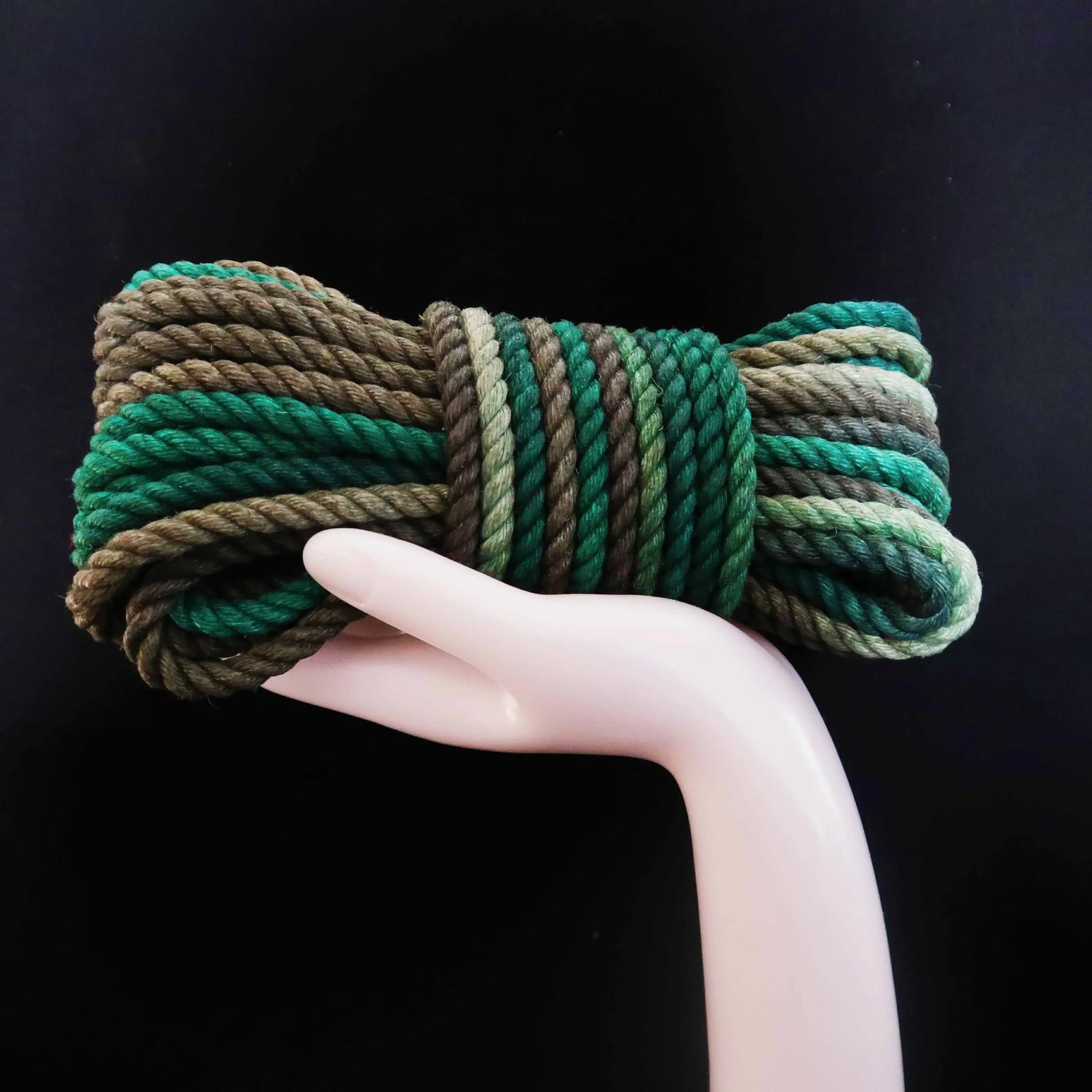


1. When Should You Oil Your Shibari Rope?
Brand-new ropes: Most fresh ropes need pre-seasoning, but SHOSHINSHA ropes come pre-treated, so you can usually skip the first oiling step.
Regular use: If you tie weekly, oil every 1-2 months. If you tie occasionally, oiling every 3-5 sessions is usually enough.
Rough or gray rope: If the rope starts to feel dry, rough, or faded, it may need a light oiling.
Sweat, dirt, or moisture: If rope gets sweaty, damp, or dirty, clean it and let it dry properly before oiling.
2. Rope Care 101
Step 1: Cleaning
- Do not soak hemp or jute rope unless you understand how that material reacts to water.
- Remove dust with a soft brush, or spot-clean grime with a lightly damp cloth.
- If loose fibers appear, lightly singe them and wipe the rope afterward.
Step 2: Oiling
- Rub a small amount of oil between your palms, then work it into the rope section by section.
- Focus on high-friction areas such as the middle sections and knot-heavy areas.
- Use less oil than you think you need. Too much can make rope sticky and attract dust.
For rope maintenance
If you prefer a ready-made option, use a small amount and apply it gradually rather than coating the rope heavily.
Step 3: Drying
- Hang rope in a shady, breezy place for around 24 hours.
- If you need to dry it faster, use cool air only.
- Store ropes hanging or loosely coiled in a dry, breathable space.
3. Oil Choices: What to Use and What to Avoid
Why Oil Matters
- It helps prevent cracks and splits.
- It keeps handling smoother and more comfortable.
- It can extend the rope's lifespan when used correctly.
Common Rope Oil Options
Some riggers make their own blend with jojoba oil, beeswax, or other rope-safe conditioners. The important part is to apply lightly, test first, and avoid anything that becomes sticky or rancid over time.
Oils to Avoid
- Olive oil, because it can go rancid.
- Heavy mineral oil, because it may affect natural fibers over time.
- Anything strongly scented if you or your partner has sensitive skin.
4. Pro Tips for Longer-Lasting Rope
- Patch test first: Oil a small section and wait 24 hours before treating the whole rope.
- Use thin layers: A light, even layer works better than heavy application.
- Store smart: Keep rope dry and breathable, not sealed in a damp space.
- Retire old ropes: If the rope is shedding, brittle, or damaged no matter how you care for it, stop using it for load-bearing or safety-sensitive ties.
- Use water carefully: Spot-clean when possible. Full washing can change the rope's size, texture, and strength.
When rope is ready to retire
If old rope feels brittle or unreliable, replacing it is safer than trying to revive it forever.
Final Thought
Good rope care is simple: clean gently, oil lightly, dry fully, store properly, and retire rope when it no longer feels dependable. A well-cared-for rope handles more smoothly and supports safer, more consistent tying.