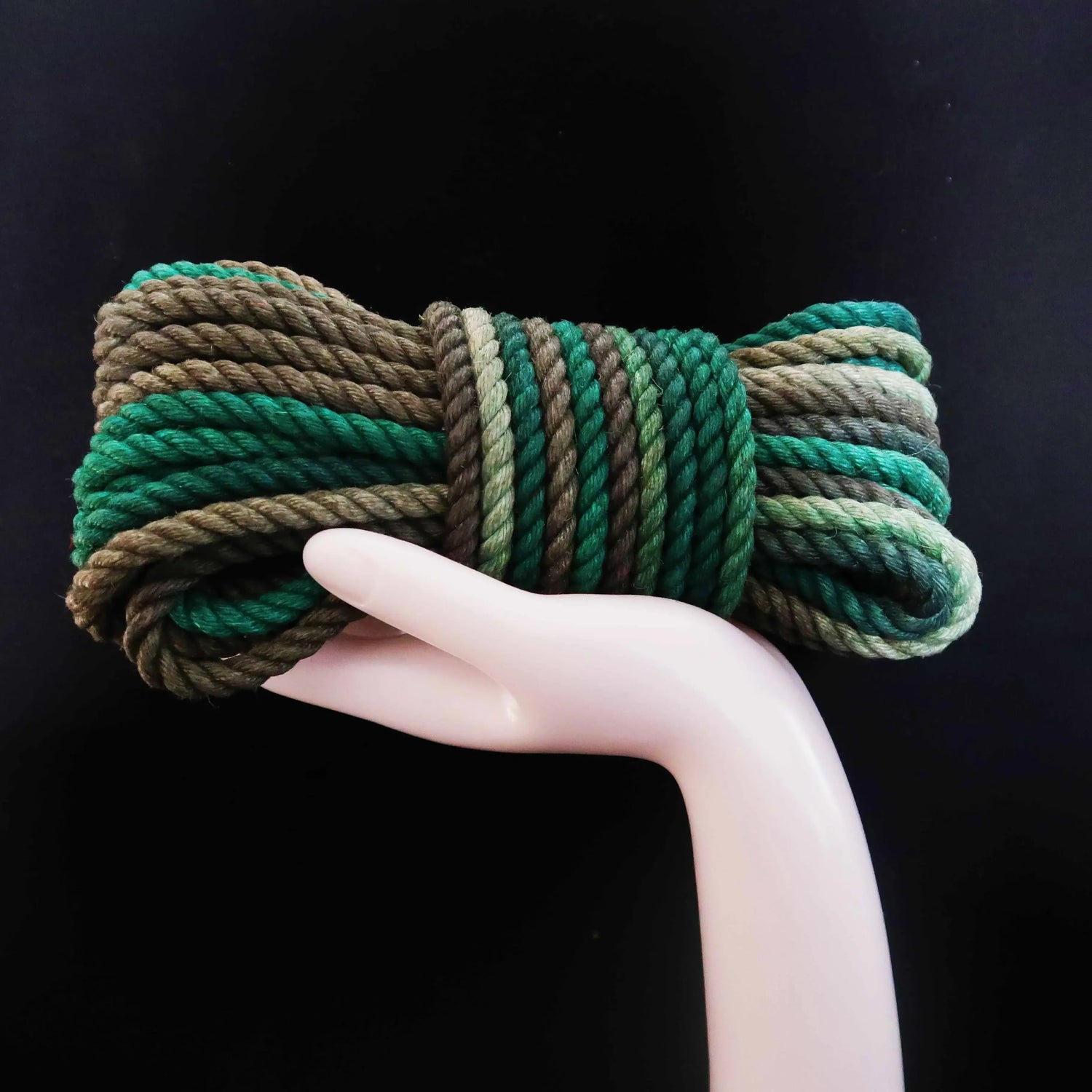

Before putting your rope away after practice, take a moment to check it. You still remember how it was used, and it is easier to set a questionable piece aside now than to find it mixed into the kit next time.
Avoid washing jute or hemp rope unless it is necessary: water can change its feel and handling. For ordinary surface dirt, a clean cotton cloth dampened with water and wrung out well is usually the first option. A rope that needs a full wash also needs a complete drying and reconditioning process afterwards.
Check how your rope was prepared
Check what you bought before treating it. Raw rope needs different care from rope that has already been partly or fully prepared. Keep the product description and care instructions with your order details: the fiber, dye and finish all affect which treatments are suitable and whether it can be washed.
Our existing care guide notes that SHOSHINSHA pre-treated ropes can usually skip the first oiling. Check the instructions for the rope you ordered. There is no need to boil, singe or re-oil a new rope just because those steps appear in someone else’s routine.
Check the whole length before packing away
Unbundle the rope in good light. Look along its length and compare any questionable section with the rest. A damaged strand, a worn patch or an end that is coming apart deserves a closer look. Inspect again before the next use; checking while packing away does not replace that step.
Look for a specific change, such as one section becoming much thinner than the rest. That tells you more than a general impression that the rope feels old. If you are unsure, photograph the area and set the rope aside with a note so nobody puts it back into use by mistake.
Fine fuzz on the surface is different from a damaged strand. Removing the fuzz may improve appearance, but it cannot repair the structure underneath. Do not judge a rope’s condition by how smooth it looks after treatment.
For everyday cleaning, start with a damp cotton cloth
Use a clean cotton cloth, dampened and wrung out well, to wipe the dirty section gently. Keep the rope from becoming saturated, then let it dry fully before packing it away. This removes surface dirt; it does not establish that the rope has been disinfected.
Set the rope aside if sweat has soaked into it or you suspect contamination. A clean-looking surface tells you little about the inside of the strands. Check the product’s cleaning instructions and consider the contamination before deciding whether it can be used again.
What about wiping with 75% alcohol?
Check with the maker before using a 75% alcohol wipe. It needs to be compatible with the rope’s fiber, dye and finish. If approved, follow those instructions and avoid soaking. Alcohol does not kill every type of microorganism, and wiping the outside does not establish that the inside is disinfected. Advice for disinfecting general surfaces cannot confirm that this works for porous rope.
Alcohol is flammable. Keep an alcohol-treated rope away from flames, heaters and heated drying equipment, and allow it to air out fully in a well-ventilated place. If contamination cannot be dealt with using a suitable, established method, stop using the rope on a person.
If your rope needs washing
Only wash rope that the maker says is washable. Its fiber, construction and dye affect how it responds. If it needs reconditioning afterwards, set aside time for the whole job: wash it, arrange suitable vertical hanging and drying straight away, let it dry through, break it in as needed, apply a little compatible oil or wax, and inspect it again.
Dry promptly, with the rope hanging vertically
Unbundle washed rope promptly. If its care instructions call for vertical hanging, hang it in a ventilated space using the support or tension the maker specifies. Jute may need controlled tension to limit changes in shape as it dries. Do not add improvised heavy weights; hanging the rope does not guarantee that it will return to its original condition.
Start drying straight after washing and keep air moving around the rope. A fan is preferable to guessing a dryer setting. Heated drying is only appropriate when the maker has specified a validated temperature and method for that rope, so there is no oven or tumble-dryer setting that this guide can recommend for every product. Let the rope dry all the way through before continuing.
Breaking-in helps restore a more flexible feel
A rope can feel stiff after washing and drying. Breaking-in works it mechanically to make it more pliable, using controlled movement and friction. It can also loosen surface fibers for removal. Singeing those fibers is a separate step; during breaking-in, avoid damaging the strands as you soften the rope.
Use the technique recommended for your rope and stop once it has the required flexibility. Extra friction adds no guarantee of a better result. Breaking-in cannot replace strength lost through washing, wear or damage, and softness does not establish suitability for suspension.
Finish with a light oil or wax treatment
Once the rope is fully dry and you have finished breaking it in, apply a compatible rope oil or wax as directed. Start with a small amount and spread it lightly and evenly. Too much can leave the rope heavy or sticky, so avoid saturating it. Keep the ingredient list for products that will touch skin.
Inspect the whole length again before returning it to the kit. Once dry and ready for storage, coil loosely and keep it in a dry place out of direct sunlight. Record any washing and treatment so its history does not get lost between sessions.
When to stop using a rope
Retire a rope from body use if it has structural damage or you can no longer trust its condition. That includes simple ties. Refinishing the ends or adding conditioner cannot repair damaged fibers.
If you are unsure about a change, send the seller the product details, a photo of the whole rope and a close-up of the area. Explain what happened and any washing or treatment you have done. Photos can help that conversation, although they cannot establish the rope’s strength or suitability for suspension.
For preparation details, see our rope conditioning and maintenance guide. If you are replacing a piece, compare the fiber and dimensions in our rope selection guide.
Rope care questions that come up after practice
Do I need to oil the rope every time?
No. Inspect it and follow its care instructions. Routine use alone is not a reason to keep adding conditioner.
Should I burn off every loose fiber?
No. Singeing is a preparation technique, not an automatic response to fuzz. Follow product-specific instruction; heat can damage the rope, and surface treatment does not repair structural wear.
Can I melt a jute or hemp rope end closed?
No. These plant fibers do not melt closed like thermoplastic rope. Maintain the maker’s chosen end finish, such as whipping or an end knot.
How many years should a set last?
There is no fixed lifespan that lets you skip inspection. Judge the rope by its condition and its history of use and treatment, not just how many years you have owned it.