

As a rigger who spends most of my life tangled in jute, I get asked the same question constantly: “Isn’t it just being tied up? Why do both people get so… addicted to it?”
It’s a fair question. From the outside, it looks like a physical puzzle. But once you’re in the space, you realize it’s not about the knots. It’s a high-stakes sensory experiment involving endorphins, the shedding of psychological armor, and a level of trust that most people don’t get to experience in their daily lives.
At my studio, Shoshinsha, we’ve seen countless pairs walk through the door. I’ve watched the transformation happen in real-time, and it usually follows a very specific, beautiful trajectory.
1. The "Chemical Landing"
I remember a session early on with a guest who arrived with her shoulders practically touching her ears from stress. She was a high-powered executive, used to carrying the weight of a thousand decisions.
As the first lines of rope settled over her frame, I could feel her resistance. But as the wraps increased, providing that consistent Deep Pressure Input, something shifted. Her breathing went from shallow and jagged to deep and rhythmic.
Physically, her brain was starting to flood with endorphins and oxytocin. It’s a natural "chemical cocktail" that acts as a sensory mute button for the outside world. This is the entrance to Subspace—a mental state where the past and future disappear, leaving only the sensation of the rope and the present moment.
2. Why the Vibe Matters
In the Shoshinsha philosophy, the experience doesn't start with the first knot; it starts the second you walk into the room. You can't reach that "addictive" headspace in a sterile, brightly lit room with a TV humming in the background.
-
The Light: We keep things dim, usually just a few warm floor lamps. When you pull back the visual stimulus, the brain is forced to reallocate all that processing power to touch and sound.
-
The Sound: I’m big on music that mimics a resting heart rate—usually something in the 60-80 BPM range. When the "scritch" of the rope moving against itself starts to sync up with the beat of a dark ambient track, time effectively stops. It’s a state of Flow that hooks the rigger just as much as the one being tied.
3. The Rope as a Tether of Trust
I’m often asked why we’re so obsessive about the rope itself. Why not just grab some nylon from the hardware store?
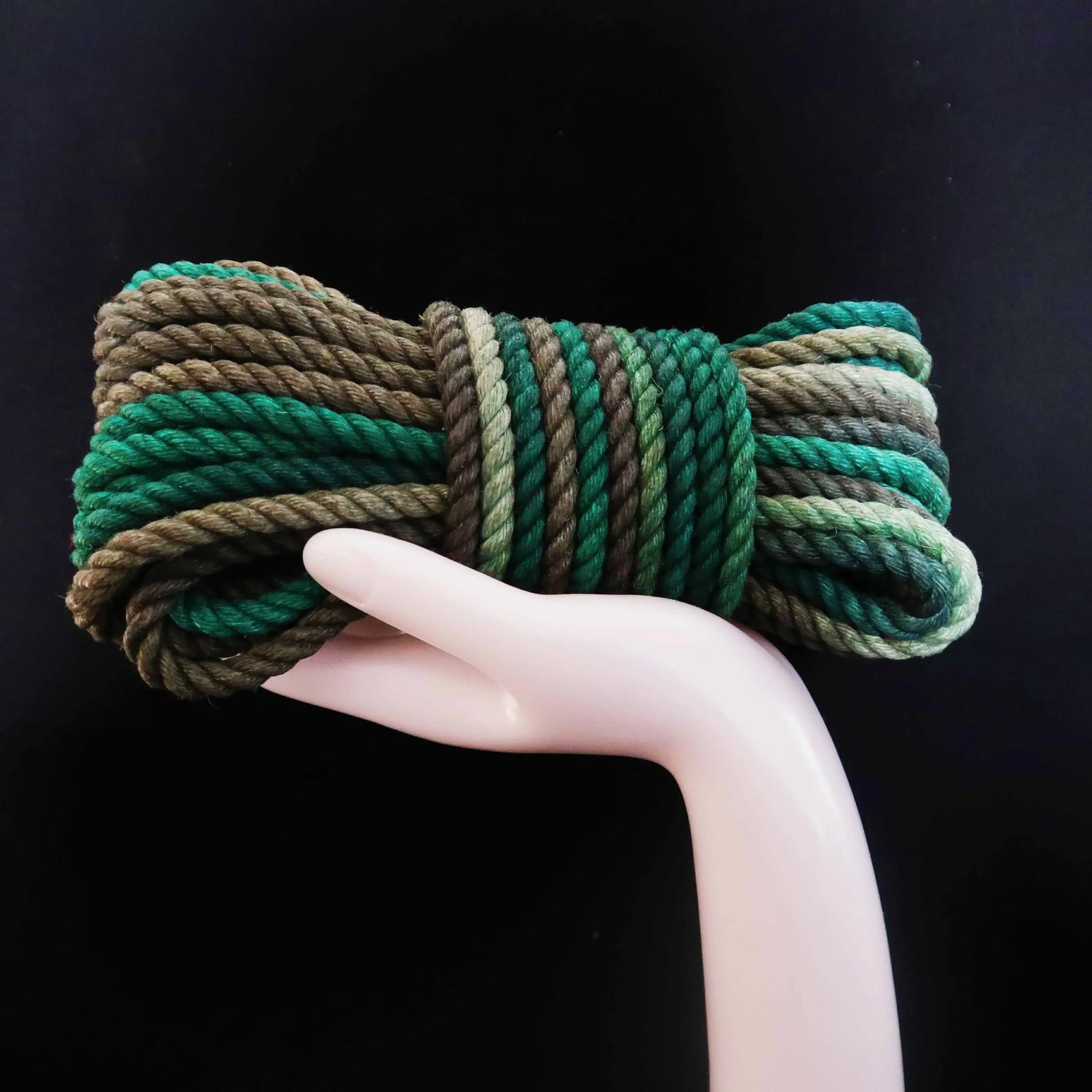
Because the rope is the bridge of trust. I’ve seen beginners use cheap synthetic lines that slip or "bite" unexpectedly. That sudden movement breaks the spell and triggers a flight-or-fight response. We use professionally treated jutebecause it has "mechanical bite"—it stays exactly where I put it.
When the rope is hand-singed and conditioned with jojoba oil and beeswax, it feels like an extension of the hand rather than a foreign object. That warmth and reliability are what allow the person being tied to truly let go.
4. The Freedom of Letting Go
For the rigger, the "high" comes from the heavy responsibility of keeping someone safe while creating something beautiful. But for the person in the ropes, the addiction is often about the temporary loss of agency.
We live in a world where we are constantly forced to choose, lead, and perform. In the ropes, you don't have to do anything. You don't have to decide. You just have to exist. That total surrender is a massive psychological relief.
5. The Aftercare: A Gentle Re-entry
The reason people come back isn't just the tie—it’s the Aftercare.
Coming out of a deep session is like waking up from a heavy dream. At the studio, we prioritize the "soft landing." It’s about the blankets, the water, the quiet conversation, and the physical closeness that follows. This final stage cements a bond of trust that is incredibly rare. That feeling of being seen, protected, and cared for is the most potent "drug" in the room.