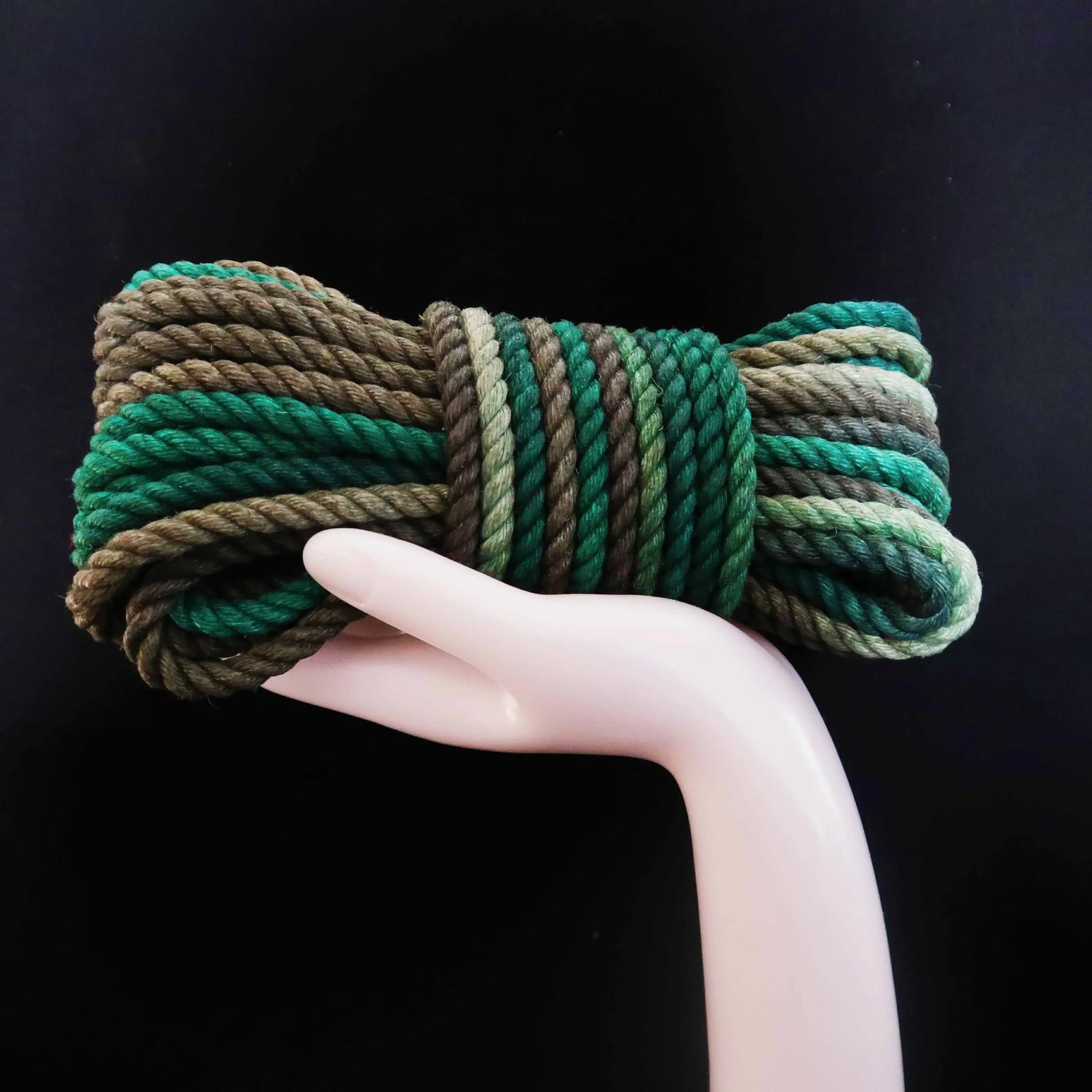


Quick answer: For most beginners, a natural fiber rope set in the 8-10 meter range is the easiest place to start. Jute is the classic choice for a fast, responsive shibari feel; hemp is softer and heavier; cotton and bamboo are gentler options for light floor work and decorative ties.
If you are buying your first set, choose by use case first: beginner practice, full-body floor work, sensitive skin, or advanced training. Material, length, quantity, and diameter all affect comfort, control, safety, and how the rope behaves in your hands.
Best Shibari Rope Choice by Use Case
| Use Case | Good Starting Point | Why It Fits |
|---|---|---|
| First shibari rope set | Starter Jute Kit | Simple, practical, and enough for basic ties and early practice. |
| Full-body floor work | Rope kit collection | A matched set is easier than building your rope bag one piece at a time. |
| Traditional shibari feel | Premium Jute Rope | Fast through the hands, good bite, and strong feedback for knots and frictions. |
| Sensitive skin or softer floor work | Hemp rope or Bamboo rope | Usually smoother against the skin, especially for decorative or non-suspension practice. |
| Suspension training | Advanced Kit or Master Kit | More ropes for complex work. Training, supervision, and safety tools are essential. |
1. Choosing the Right Rope Material
Each rope material has a different feel in the hand and on the skin. There is no single best material for everyone, but each one has a clear use case.
- Jute rope: Traditional for shibari, quick through the hands, textured, and responsive. It is often the best first choice if you want the classic shibari experience.
- Hemp rope: Softer and heavier than jute, often gentler on sensitive skin, with a steadier feel when tying.
- Cotton rope: Soft and familiar, but usually stretchier. Better for light practice and comfort-focused floor work, not suspension.
- Bamboo rope: Very soft and smooth, suitable for floor work, decorative ties, and sensitive skin. Not recommended for suspension.
- Synthetic rope: Durable and easy to clean, but it does not feel like natural fiber and may behave differently under tension.
Compare natural fibers
If you are deciding between the two most common natural fibers, start with this comparison before choosing a set.
2. Rope Length and Quantity
For many shibari styles, 8-10 meters is the most versatile rope length. It is long enough for common ties, but still manageable for practice.
The number of ropes you need depends on the tie:
- Basic upper-body binding: Usually 2-3 ropes.
- Full-body floor work: Usually 4-5 ropes.
- Suspension training: At least 6 ropes, plus proper instruction and safety tools.
- Leg binding: Usually 1-2 ropes, depending on complexity.
- Simple wrist or ankle ties: Usually 1-2 ropes.
3. Rope Diameter
Rope diameter affects both feel and appearance. Thinner ropes allow more detail, while thicker ropes spread pressure more broadly.
- 6mm: A common standard for shibari. Useful for most practice, decorative work, and many structured ties.
- 4mm: Better for detail work, accents, hair, fingers, toes, and delicate areas. It is not a default choice for load-bearing work.
4. Common Beginner Mistakes
- Buying too few ropes: One rope is enough to try basic handling, but most body ties need more than that.
- Choosing only by softness: Softer rope can feel pleasant, but texture, control, and stretch matter too.
- Skipping rope care: Natural fiber rope should be checked, dried properly, and maintained so it stays comfortable and reliable.
- Trying advanced work too soon: Suspension and load-bearing practice require instruction, spotters, and emergency tools.
5. Safety Before You Tie
Before practicing, check your rope condition, understand basic body safety, and keep emergency cutting tools nearby. Rope choice matters, but safe tying habits matter more.
Before your first session
Read the safety basics and make sure your rope is clean, dry, and in good condition.
FAQ
What is the best shibari rope for beginners?
For most beginners, jute rope in a practical starter set is a strong first choice because it teaches rope handling, friction, and tension clearly. If comfort is the main concern, hemp or bamboo may feel softer for floor work.
How many ropes do I need to start shibari?
Two to three ropes are enough for many basic upper-body ties. Four to five ropes are more useful for full-body floor work. Suspension training usually requires more ropes, but it should only be practiced with proper instruction and safety preparation.
Is jute or hemp better for shibari?
Jute is usually faster, lighter, and more textured. Hemp is usually softer, heavier, and steadier. If you want a traditional shibari feel, start with jute; if you want a softer natural fiber, compare hemp.
What rope length is best for shibari?
Many people start with 8-10 meter ropes because that length works for a wide range of common ties while staying manageable during practice.
Can I use cotton rope for shibari?
Cotton rope can be comfortable for light floor work and decorative practice, but it is usually stretchier than jute or hemp. It is not the default choice for suspension or advanced load-bearing work.
Final Thought
The best shibari rope is the one that matches your body, your tying style, and your current skill level. Start simple, learn safety first, and build your set gradually as your practice becomes clearer.